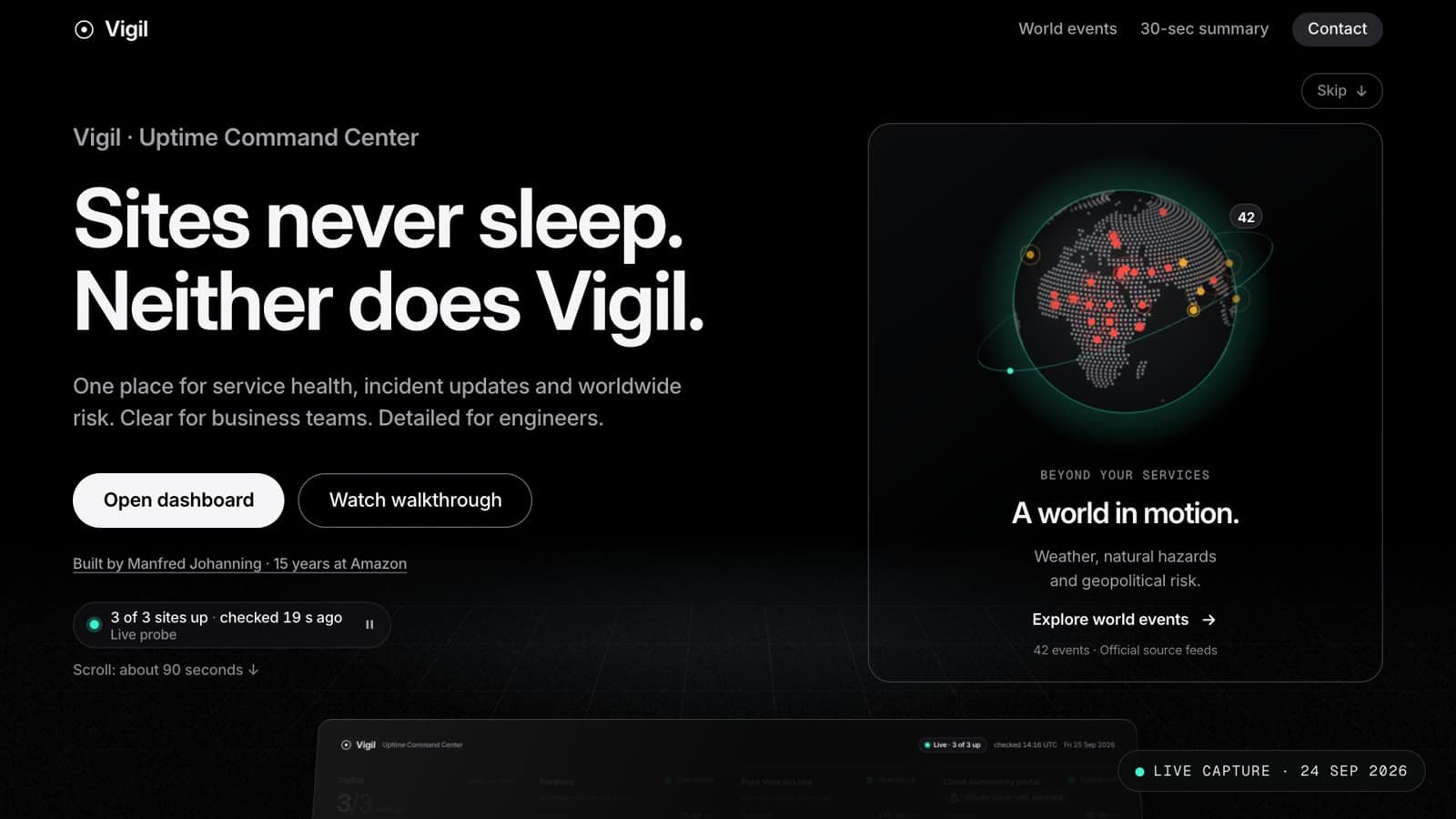
AI that knows when ahuman needs to take over.
I build AI for home-services shops that texts back the calls you miss, books the job in Jobber or Housecall Pro, sends the work order to your crew in Spanish, and is designed to hand anything urgent, angry or about money to a person.
- 15+ yrs
- Running operations inside a global tech company
- 68%
- Downtime cut by one incident-response program
- 300+
- Projects governed under a single framework
- 40+
- Business-continuity drills across five sites
The problem
The calls you miss after 6 p.m. are the jobs you lose.
A plumbing shop with eight technicians misses the call at 7 p.m. The owner is on a job, the office closed at five, and the customer with the burst pipe calls the next shop on Google.
When the crew works in Spanish and the customers write in English, the owner is also the translator, the dispatcher and the priority filter: reading the message, calling the technician, repeating the address, confirming the time, in two languages, from a phone.
You do not have a system. You have a phone.
24%
of daytime calls get booked at shops with fewer than five technicians
9%
of calls get booked after 6 p.m. at the same shops
$129
what a plumber pays for one Google search lead, before it goes to voicemail
$100k
a year: what five more points of booking rate are worth to a shop with 5 to 14 technicians
What owners say about the AI answering tools they tried
- Callers hang up on a robot, especially one pretending to be human
- Voicemail with extra steps
- Wrong addresses and callback numbers
- Scripts that break on the first unusual question
- Per-minute pricing that creeps
What they praise
- After-hours emergencies captured instead of lost
- Bookings straight into the calendar
- A text back the moment a call is missed
- Someone else doing the setup
Dispatch Desk is built from the second list, and it says it is automated in its first message.
Sources: ServiceTitan call booking data, 2022, more than 3,000 trade businesses; LocaliQ search advertising benchmarks, 2025; owner forums, 2025 and 2026.
What I build
Three things, done properly.
Not a menu of ninety services. One product for the phone your shop cannot answer, a film that brings the work in, and the automation between the tools you already pay for.
Dispatch Desk
Answers, books and dispatches, and knows when to stay quiet.
An unanswered call gets an automatic text: who we are, that it is an automated assistant, and one question. Routine requests become jobs in Jobber or Housecall Pro, the customer gets a confirmation, and your crew gets the work order in Spanish. A gas smell, a billing dispute, a mention of a lawyer or anything the system is not sure about is routed to a person by design, with the whole thread attached. It is not set up to quote a price you did not publish, to promise an arrival time, or to handle an emergency on its own.
- Missed-call text-back, day and night, in English and Spanish
- SMS and WhatsApp intake, with addresses and numbers read back
- Jobs created in Jobber or Housecall Pro
- Work orders to your crew in Spanish
- A signed escalation matrix: what it may do alone, and what it never does
- Thirty days in copilot, then release one category at a time
- Monthly report: volume, automatic rate, escalation rate, jobs captured
Everyone sells you the answer rate. I publish the escalation rate.
Animated campaigns
Films that sell, at software prices.
Cinematic AI animation, written and directed like real advertising instead of prompt soup. One story, cut for every place you post it, narrated in English and Spanish, and delivered in days instead of a quarter.
- 60 to 90 second brand films and launch spots
- Product and process explainers
- Bilingual EN / ES narration
- 9:16 and 4:5 cutdowns for Reels, TikTok and Shorts
- Thumbnails, captions and subtitle files
- A two-minute training video in your crew's own language
Days to a finished film, not a quarter.
Business automation
The boring wins that pay the rent.
The unglamorous plumbing between the tools you already pay for. Quote to invoice, form to CRM, spreadsheet to dashboard. It is the least exciting thing I sell, and the easiest to measure: every click it removes is time you get back.
- Quote → invoice → chase → reconcile
- CRM hygiene and pipeline automation
- Scheduled reports that land in your inbox
- Inventory, restock and booking alerts
- Document intake, OCR and filing
- Dashboards your team will actually open
Sized against the hours it gives back, and you see the math first.
Not on the menu: staff augmentation, standalone chatbots, free pilots, guaranteed emergency response, outbound AI calling, regulated advice, or websites except as the front door of a system.
See the review flow
Three moments from a clickable prototype.
Recorded from the Avellanas Surf Camp prototype on invented data. No AI model runs in it: the drafts on screen were written in advance to show the review step, and nothing is actually sent.
One queue
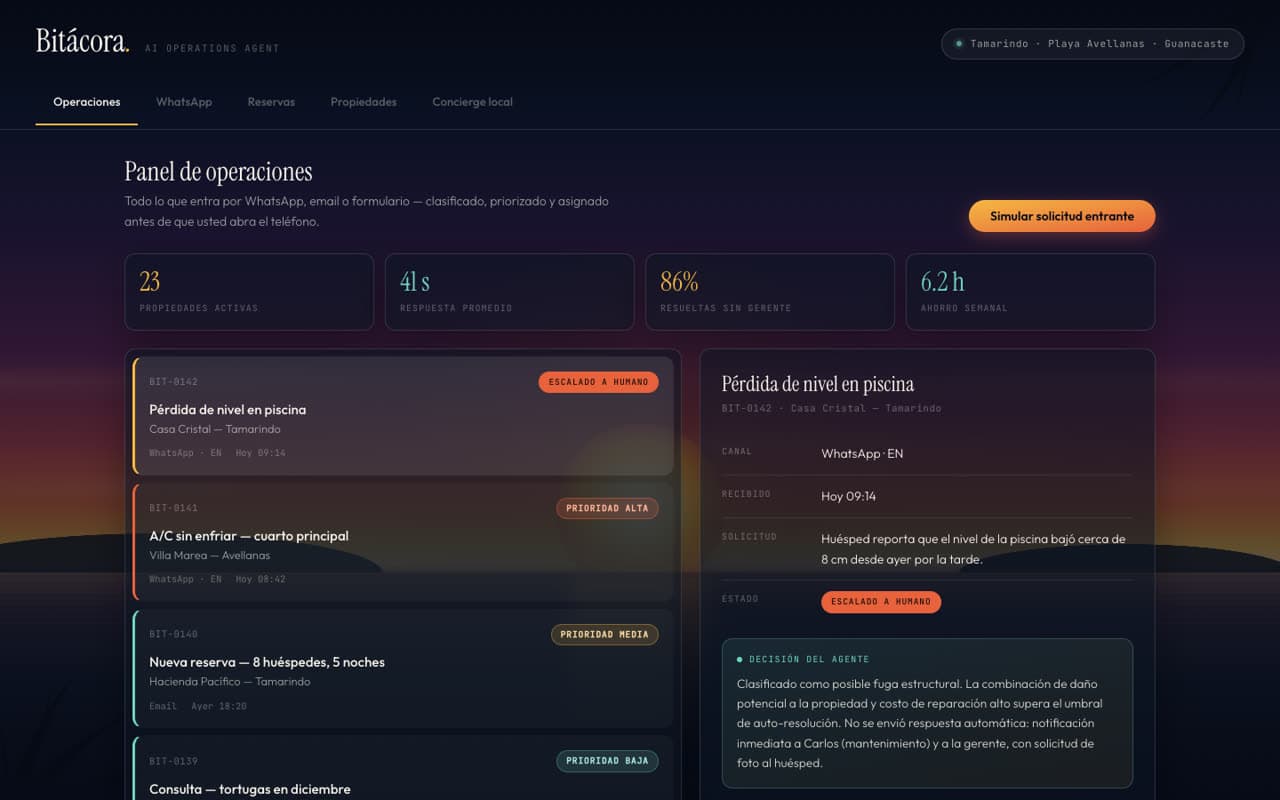
LengthAirbnb, WhatsApp, phone and walk-in requests from three properties land in one list, with draft replies ready for review.
A person approves
LengthA draft waits until someone reads it. They can edit it or reject it, and nothing reaches the guest before they approve.
Each role sees its own
LengthThe caretaker signs in and sees one property. The owner sees all three.
How it decides
Three states. No fourth.
Every request that arrives lands in exactly one state, and you sign which categories go where before anything is released. Escalate does not mean answer carefully. It means the system does not answer.
Automatic
Answers the customer directly, and logs what it did and why.
Only after evidence in copilot, one category at a time, on a written release you sign.
Copilot
Drafts the reply, notifies your team, waits for approval.
Where every category starts. The first thirty days run entirely here.
Escalate
Sends no automatic reply at all. A named person gets the whole thread.
Permanent for the four categories below. Never released.
Always a person, never configurable downward
- 1.
Safety and property emergencies: gas, carbon monoxide, fire, flooding, electrical hazard, injury. The caller gets your own safety line, and your on-call person is paged by call and text.
- 2.
Payment disputes, refunds and chargebacks. The file is assembled and handed over; the agent never negotiates money.
- 3.
Legal language, or a threat to sue or to review. Zero automatic reply, and the whole thread is flagged.
- 4.
Low confidence. When a message is ambiguous, it escalates instead of guessing.
Never, in any state
- Quote a price you have not published
- Promise an arrival time
- Diagnose a fault, or give medical, legal or financial advice
- Collect card details or credentials
- Send marketing texts
- Act as the emergency responder: it routes and notifies, your operation responds
- Make a binding commitment: discounts, refunds, contract changes
Every month you get the numbers per category: volume, automatic rate, escalation rate, misclassifications found, and any category proposed for release or for a return to copilot. Returning a category to copilot is a normal event, not a failure.
Proof
Built, not mocked up.
Every one of these is finished or clickable today, and where one is a prototype it says so. The films were made with the same pipeline I would use for your campaign.

Yuki
One console for your team's workA ticketing console where your team plans every project on one board and finds any ticket with a single search. Show a problem with a screenshot, a screen recording or a voice note right on the ticket; speech is transcribed in the browser, and Claude drafts the procedure your team will follow. Other tools link in through its open API, its webhooks or its connector for Claude. The public demo runs on sample data that resets every night; nothing is sold yet.

The Light We Give
La luz que damosA 3:34 bilingual animated short in 1080p, with the same characters, wardrobe and light held consistent from the first frame to the last. Written, directed and finished end to end.
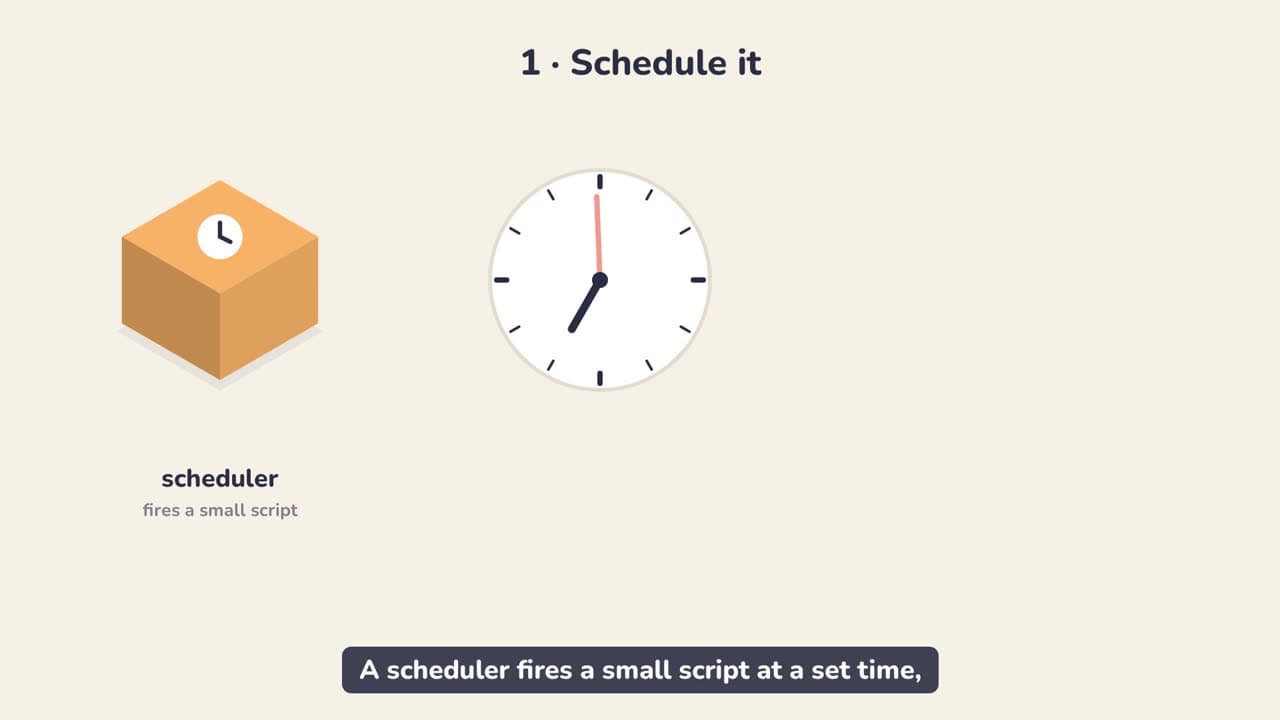
AI job-search assistant
Bilingual explainerA hand-drawn isometric explainer in English and Spanish, narrated in my own voice and rendered frame by frame from code. Total compute cost for the whole campaign: under five dollars.
Pura Vida AI Labs launch
16:9 · 4:5 · 9:16The studio's own launch film, cut for every feed it needed to live in, with the square and vertical versions reframed instead of re-rendered.

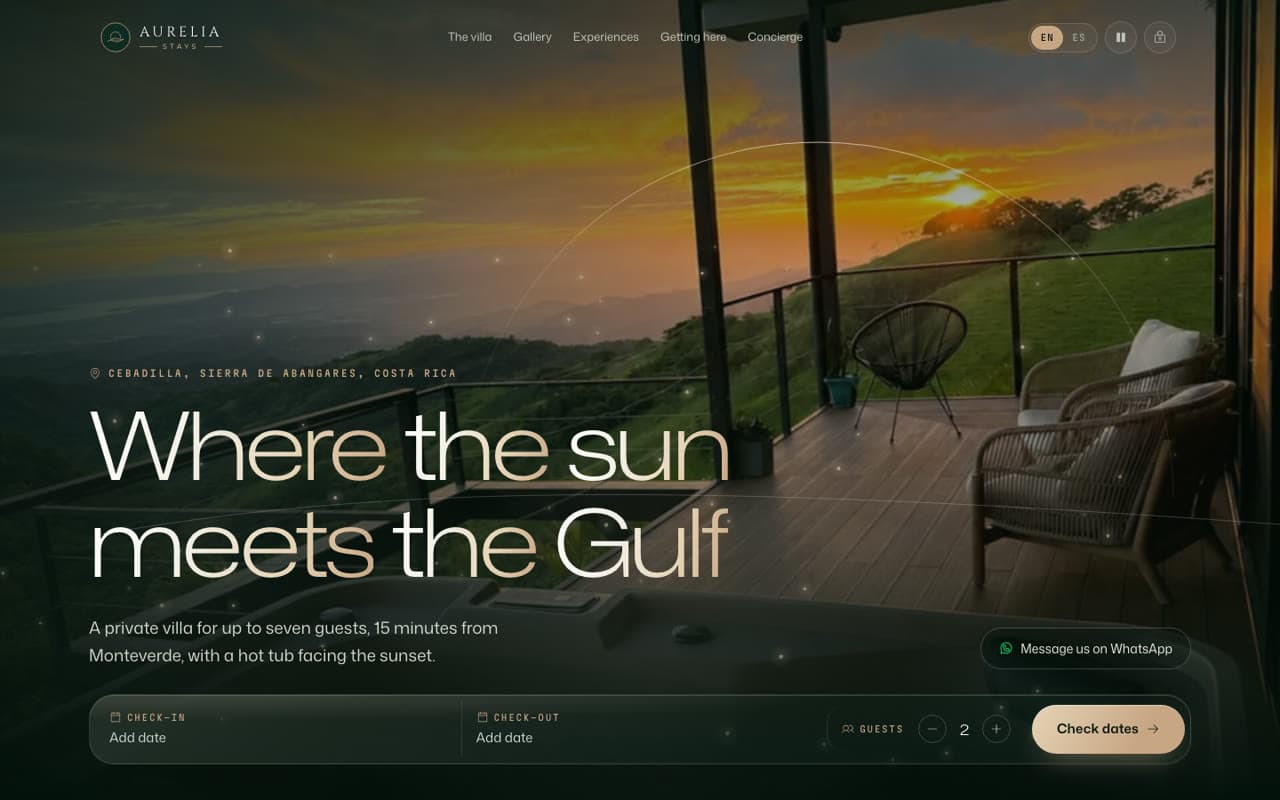
Aurelia Stays: Unforgettable
Una estadía inolvidableA 30-second vertical campaign for a private villa near Monteverde, Costa Rica, cut in English and Spanish for Reels, TikTok and Shorts. The villa's own photographs brought to life with AI motion, an original score, and one call to action: ask for dates on WhatsApp.
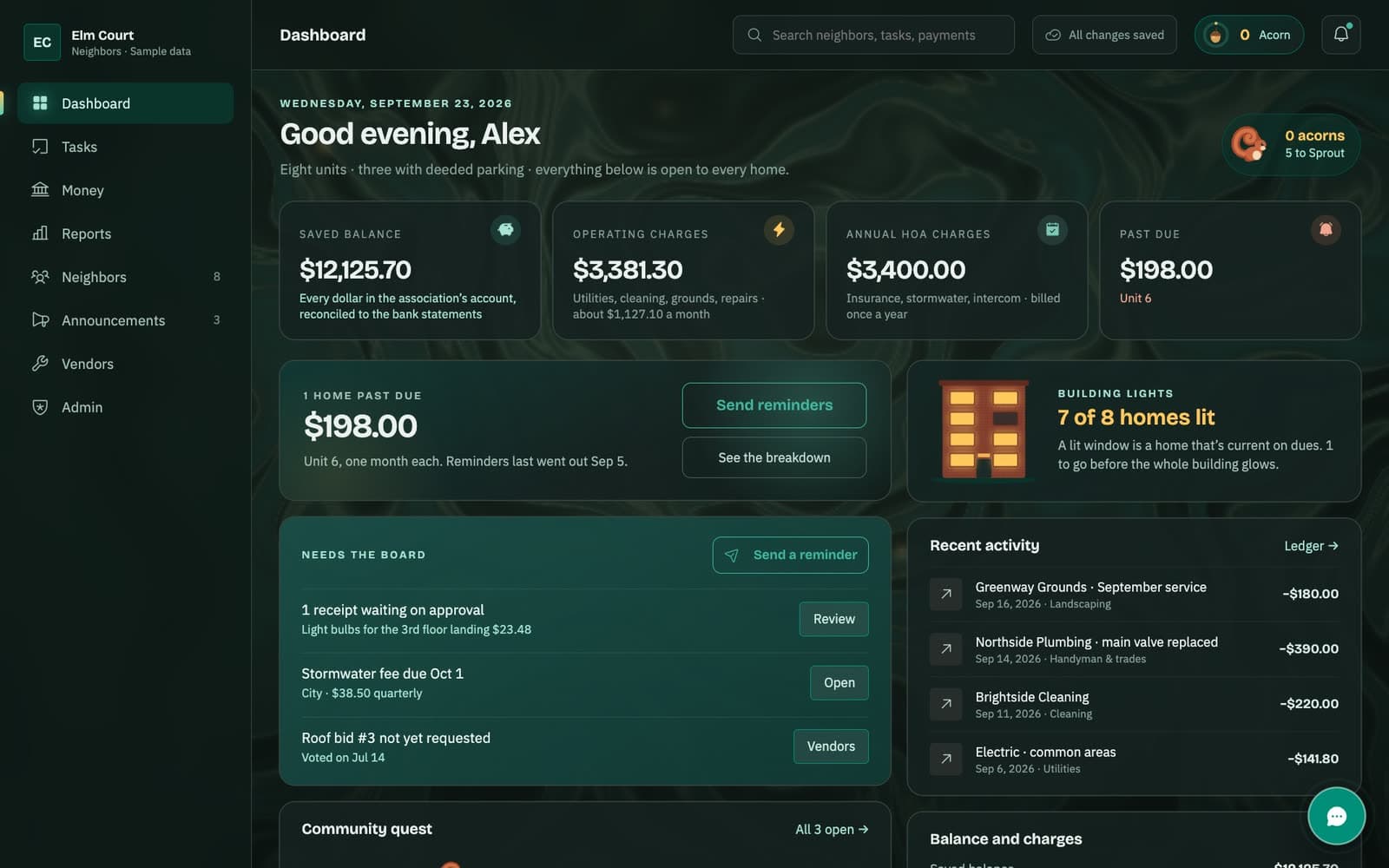
Condo association platform
Washington, DCA web app that lets an eight-unit condominium run itself: a shared ledger every home can see, repairs any neighbor can claim, and an assistant that answers from the building's own governing documents. Finishing a task even earns you an acorn from a squirrel.
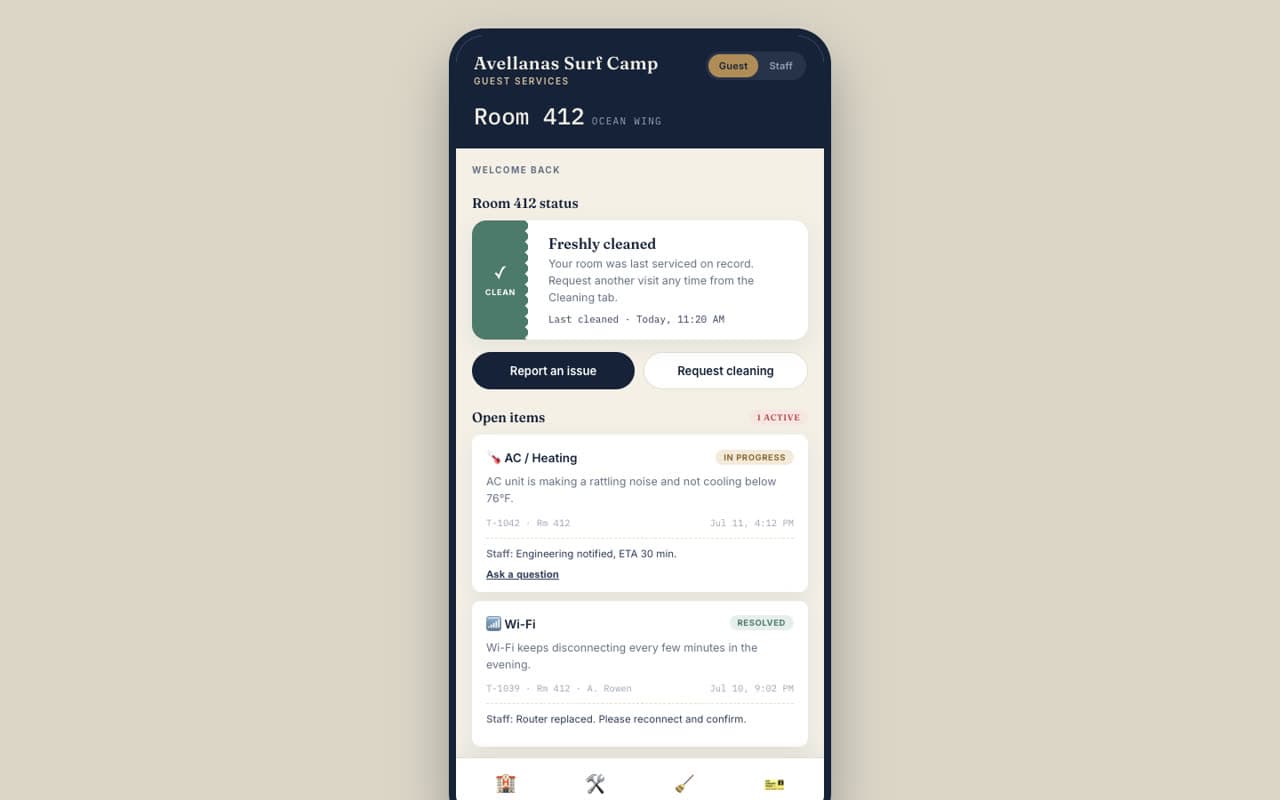
Avellanas Surf Camp
Guest app + operations hubTwo connected apps: a mobile guest-services app for room status, requests and on-site services, and a role-based operations hub for staff across several properties.
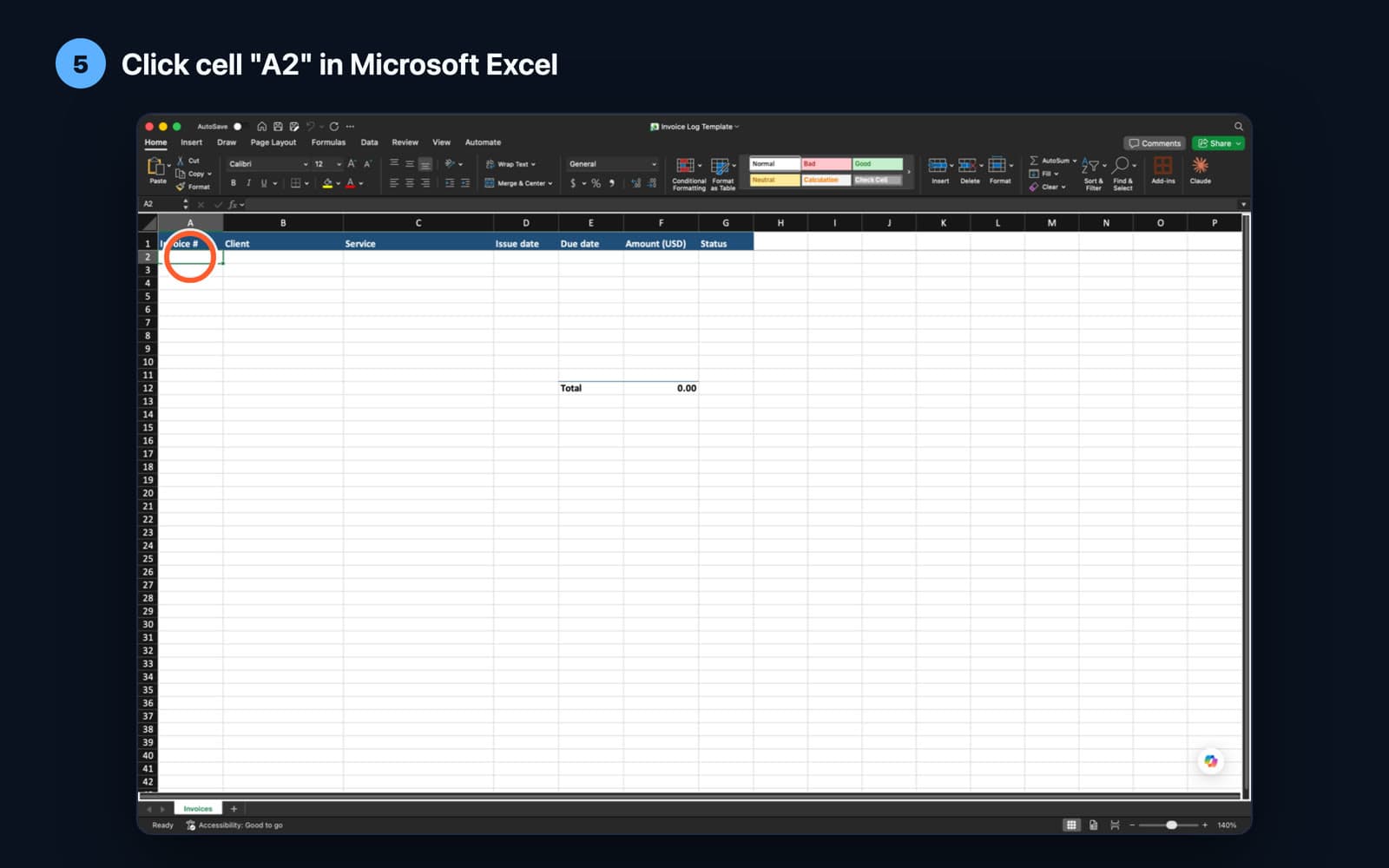
Yuki Capture
Screenshots, GIFs and screen recordingsA menu-bar app for the Mac that takes screenshots, GIFs and screen video and shares them by email. Its Guides mode records a task click by click, then takes, orders and numbers the screenshots into a step-by-step guide, ready to attach to a ticket in Yuki. It runs on my Mac today; it is not released yet.
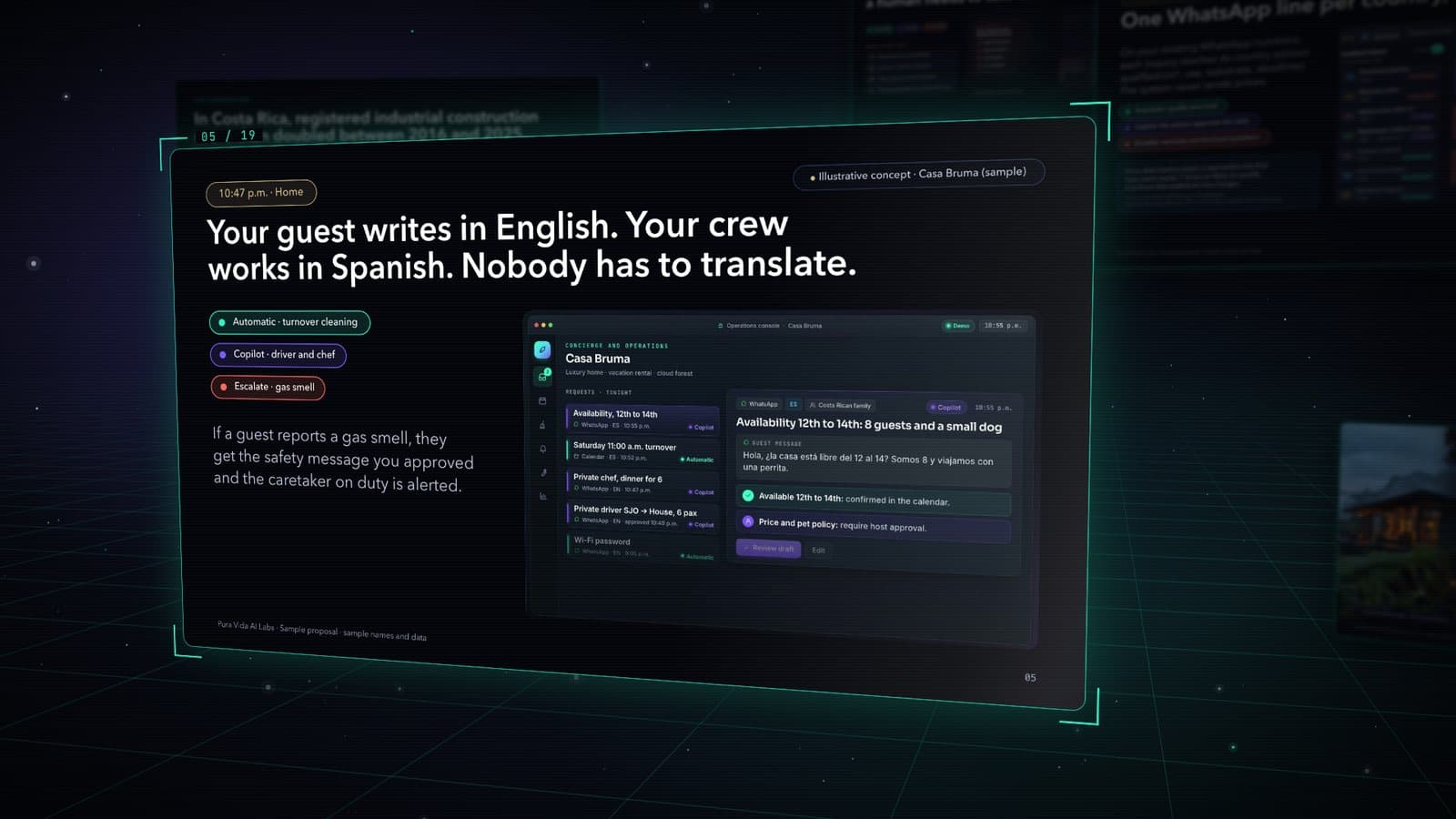
Animated sales deck
Researched, bilingual, in motionA custom sales deck built from research on your business: sourced market charts, a story from problem to next step, and animated demos of your future system playing inside the slides. Delivered in Spanish and English as editable PowerPoint.

How it goes
Four steps. No surprises.
01
Call
30 minutes, free
We walk through where calls and messages enter and where the hours go. You keep the map whether or not you hire me.
02
Discovery Sprint
Two weeks, from $2,500
A work-intake map, escalation rules in your own words, a shadow run on messages exported from your own channels with nothing connected live, your baseline of hours and jobs lost, and a fixed-price proposal credited in full to the build if you sign within 30 days. The sprint builds nothing; it measures.
03
Build
Three to six weeks
Your number and the text-back, SMS and WhatsApp intake, one integration, the rules, the console and the disclosure line. Carrier registration for business texting is filed in your shop's name and starts on day one. Nothing goes automatic on day one.
04
Copilot, then release
Thirty days, then by category
Your team approves every reply for thirty days. Categories go automatic one at a time on a written release you sign, and any category can go back to copilot. A monthly report shows what was handled, what reached a person, and why.
The part nobody else shows you
Do the math before you spend a dollar.
Move the sliders to match your business. This is the same arithmetic I run on the free call. No email required, and nothing is sent anywhere.
Time on phones and messages
Calls that slip away
Plan to price against
Hours back per month
52 h
Jobs recovered per month
13.0
Value back per month
$5,902
Pays for itself in
2.2 months
12-month return
+158%
Estimates, not promises. Recovered jobs assume you book 3 in 10 of the calls you miss today (small shops book about 9% of calls after 6 p.m., per ServiceTitan data) and count at the job's value before your costs. The Discovery Sprint measures your real numbers first.
Pricing
Priced against the hours and jobs it gives back.
A paid two-week Discovery Sprint comes first, so you see the system run on your own missed calls and messages before you commit to a build. Every fee is scoped in writing, the sprint is credited in full to the build if you sign within 30 days, and nothing goes automatic until your team has approved its replies for thirty days. Builds are half at signing and half at go-live; monthly care is billed in advance. Single-workflow builds start at $8,000; larger operations are quoted after the sprint.
United States pricing · quoted in USD
Discovery Sprint
Two weeks. Your own calls and messages. A fixed price at the end.
one-time
- A map of where work enters and what repeats
- Escalation rules drafted in your own words
- The system run in shadow mode on your recent requests
- Your baseline: the hours and jobs you lose today
- A fixed-price proposal, credited in full to the build within 30 days
Dispatch Desk
After-hours and overflow intake for a shop with 5 to 14 technicians.
one-time
- Calls and messages captured day and night, in English and Spanish
- Jobs created in Jobber or Housecall Pro
- Work orders sent to your crew in Spanish
- Emergencies, disputes and legal matters are routed to a person by design; the system is never set up to answer them alone
- Thirty days in copilot: your team approves every reply before it goes automatic
- Voice answering as an add-on, after a measured pilot on your own calls
Monthly care
Someone watching it, month after month.
per month
- Starts with the $9,500 Dispatch Desk build, paid once or split: $4,000 at signing, then $2,000 a month for twelve months in place of this monthly fee, then the standard monthly fee
- Monitoring, tuning and fixes
- 6,000 conversations a month included
- Monthly report: volume, what was handled, what reached a person, misclassifications, hours back
- Twelve-month partnership; fees move only if platform costs rise more than 15%
The honest part
I size every build against the hours it gives back. If the math does not clear, I will tell you before you spend anything, and point you at the cheaper fix, even when that fix is not me. No paying US client yet, no uptime, accuracy, booking-rate or revenue guarantee until there is production measurement behind it, and the escalation categories at launch are a minimum, not a ceiling.

Manfred Johanning
Founder, Pura Vida AI Labs
Based in
United States
Who builds it
Nearly sixteen years keeping large systems standing.
I spent nearly sixteen years inside a global tech company running operations, incident response and cross-functional programs. I built the command center that cut downtime by 68%, the framework that governed more than three hundred projects, and the drills that kept five sites running when things broke.
Now I build the same discipline into AI, at a size a shop with 5 to 14 technicians can actually buy. Sixteen years deciding what wakes a human up at two in the morning, built into software: every agent I ship has a signed escalation matrix, an audit trail and a person on the other side of it. I take on a limited number of clients at a time so every one of them gets watched properly.
I am Costa Rican and I live in the United States. Spanish is my first language and English my working one, and both run through the product, the documents and every conversation we have. I build for shops whose customers call in one language and whose crews work in the other.
Questions
Straight answers.
Yes. The first message says it is an automated assistant, every time, in English or Spanish, and the customer can reach a person at any moment by replying HUMAN or calling you. I will not set it up to pass as a person, and the contract asks you not to present it that way either.
Start here
Thirty minutes. No pitch deck.
Answer a few quick questions and watch your automation blueprint draw itself, ROI included. Then a human takes over: I read every brief myself.
Or reach me directly
Step 1 of 10
What should we fix first?
Pick one or more. About a minute. Talk instead of typing if you like.